Vapor Pressure Deficit (VPD) in the Field
Learn what vapor pressure deficit means in agriculture, how VPD links to crop stress, and how VPD helps guide irrigation, scouting, and field decisions.
Crop stress is not caused only by dry soil.
A crop can experience stress because the atmosphere is demanding more water than the plant can safely supply from its roots. This is where vapor pressure deficit, usually shortened to VPD, becomes important.
VPD is one of the most useful weather-based agronomic indices because it connects temperature, humidity, transpiration, crop water demand, and stress risk. It helps explain why a field can behave differently on two days with the same temperature, or why crops may suffer during hot, dry, windy conditions even when soil moisture is not yet fully depleted.
For field agriculture, VPD is especially valuable when it is interpreted together with soil water balance, crop stage, satellite imagery, irrigation history, and field variability.
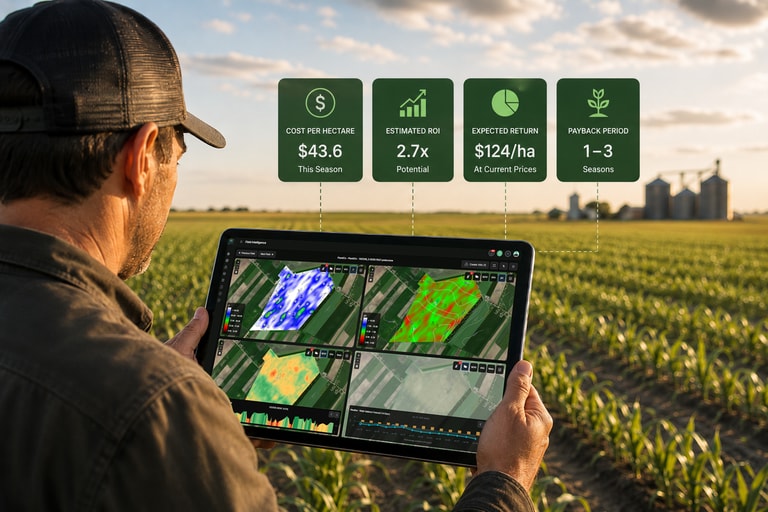
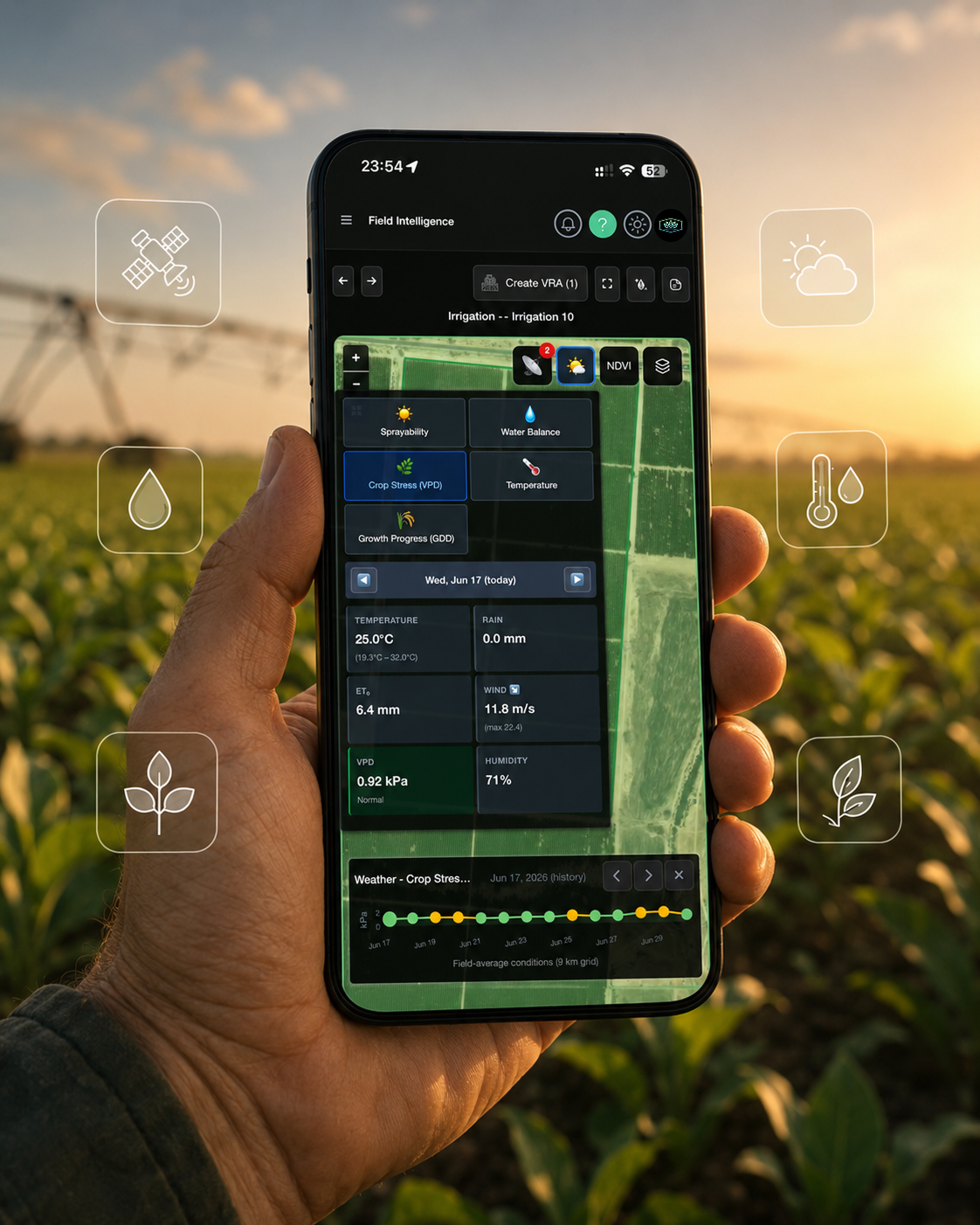
In Terra Oracle AI, VPD is not just another weather number. It is part of an explainable agronomic decision layer that helps growers understand when atmospheric demand is increasing crop stress risk and what action may be needed.
What Is Vapor Pressure Deficit?
Vapor pressure deficit is the difference between:
- How much water vapor the air could hold if it were saturated, and
- How much water vapor the air actually holds now
In simple terms:
VPD tells us how strongly the air is pulling water from the crop.
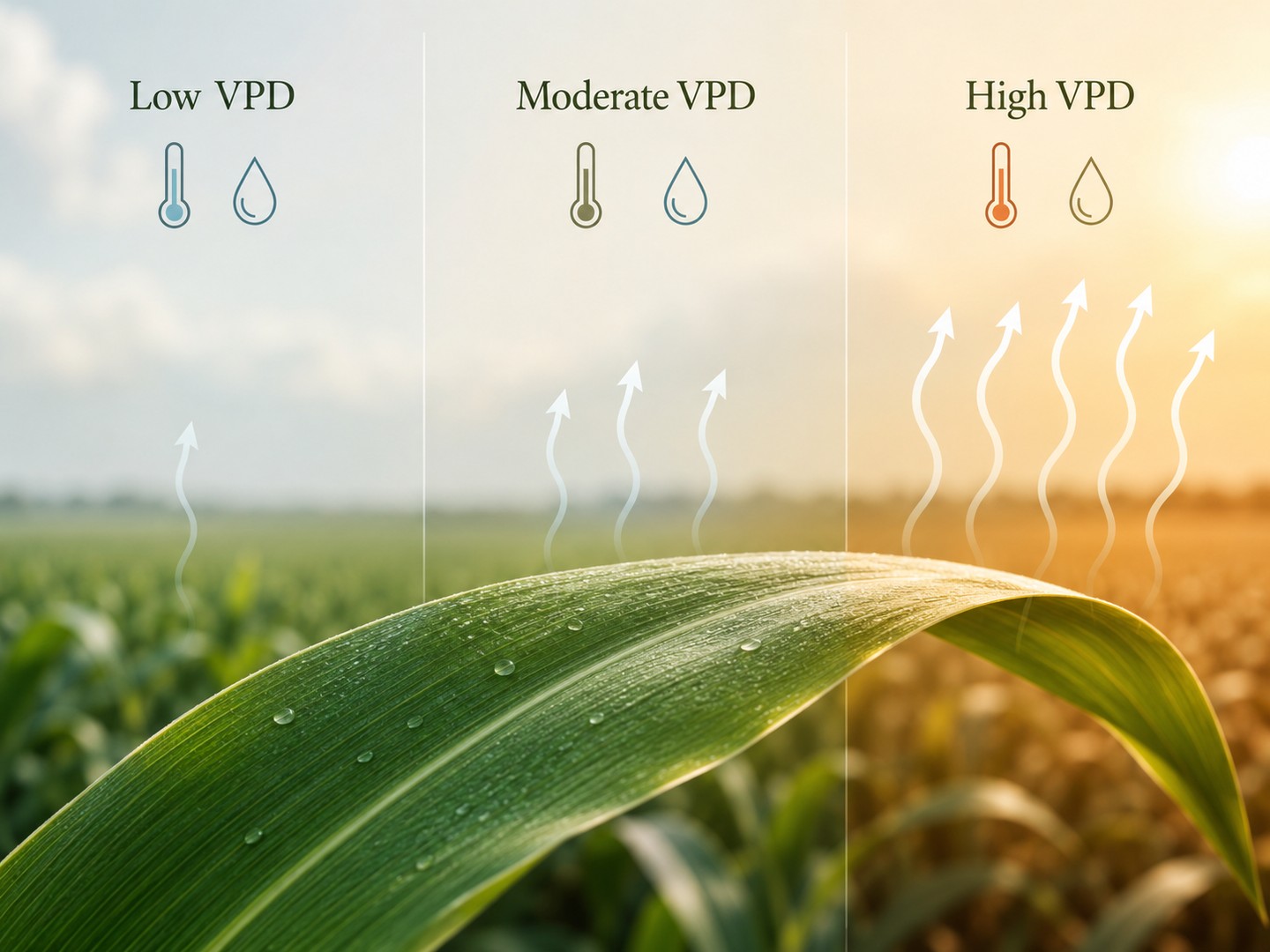
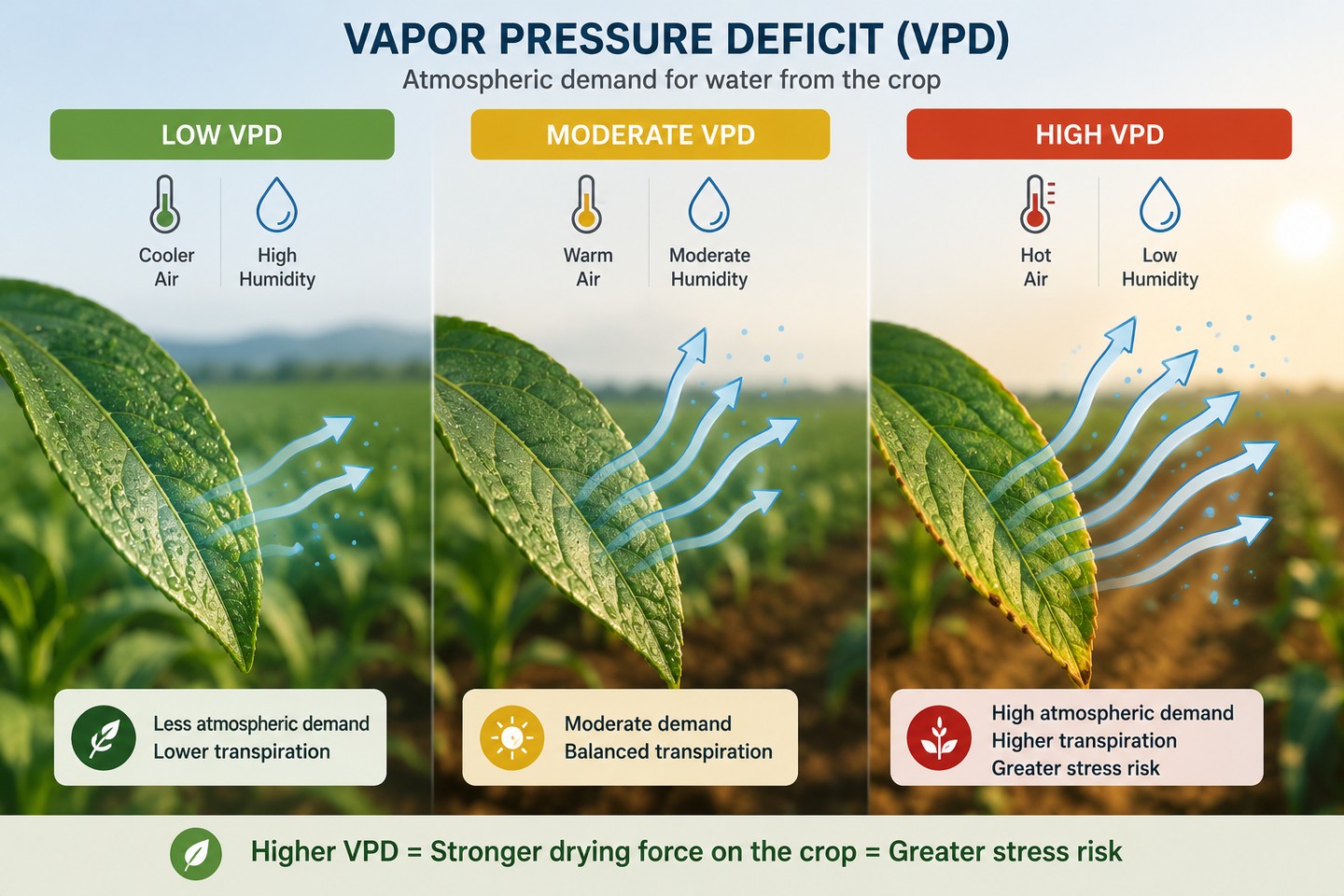
When VPD is low, the air is humid and has less capacity to pull water from leaves. When VPD is high, the air is dry relative to its temperature and has a stronger drying force.
VPD is usually expressed in kilopascals, or kPa.
A practical way to understand it:
- Low VPD: the air is already humid; transpiration demand is lower.
- Moderate VPD: the crop can often transpire efficiently if water is available.
- High VPD: the air strongly pulls water from the crop; stress risk increases.
- Very high VPD: the plant may close stomata to protect itself, reducing photosynthesis and growth.
Why VPD Matters in Agriculture
VPD matters because crops must balance two processes:
- Opening stomata to take in carbon dioxide for photosynthesis
- Limiting water loss through transpiration
When VPD rises, the atmosphere demands more water from the leaf surface. If the crop can supply that water from the root zone, transpiration may increase. But if the demand is too high, or soil water supply is limited, the crop may close its stomata.
Stomatal closure helps conserve water, but it also limits carbon dioxide uptake. That can reduce photosynthesis, growth, biomass accumulation, flowering performance, fruit development, and yield potential.
This is why VPD is closely linked to crop stress.
It is not only a greenhouse metric. In open-field agriculture, VPD helps explain heat stress, water stress, irrigation urgency, crop-stage vulnerability, and daily stress windows.
VPD vs Relative Humidity
Many growers look at relative humidity, but VPD is usually more meaningful for crop stress.
Relative humidity tells us how full the air is relative to its maximum water-holding capacity at that temperature. The problem is that warm air can hold much more water than cool air.
That means the same relative humidity can have very different crop-stress implications at different temperatures.
For example:
- 50% relative humidity at 18°C is not the same as 50% relative humidity at 35°C.
- At higher temperatures, the atmosphere can hold more water, so the drying force can be much stronger.
- VPD combines temperature and humidity into a more crop-relevant measure of atmospheric demand.
In practical agronomy:
Relative humidity describes the air. VPD describes the drying pressure on the plant.
How VPD Is Calculated
The basic concept is:
$$ \mathrm{VPD} = e_{\mathrm{sat}} - e_{\mathrm{actual}} $$
where $e_{\mathrm{sat}}$ is the saturation vapor pressure (how much water vapor the air could hold at the current temperature) and $e_{\mathrm{actual}}$ is the actual vapor pressure (how much water vapor the air currently holds).
Saturation vapor pressure depends mainly on temperature. Warmer air can hold more water vapor, so saturation vapor pressure rises as temperature increases.
Actual vapor pressure depends on the current moisture content of the air, often estimated from relative humidity:
$$ e_{\mathrm{actual}} \approx e_{\mathrm{sat}} \times \frac{\mathrm{RH}}{100} $$
A simplified explanation:
- Use air temperature to estimate how much water vapor the air could hold.
- Use relative humidity to estimate how much water vapor the air actually holds.
- The difference is the vapor pressure deficit.
This difference is the atmospheric demand placed on the crop.
In field platforms, VPD is usually calculated automatically from temperature and humidity data, often using local weather stations, gridded weather data, or field-level weather services.
What High VPD Means for the Crop
High VPD means the air is dry relative to its temperature.
In the field, high VPD can lead to:
- Faster water loss from leaves
- Higher transpiration demand
- Increased crop water requirement
- Higher irrigation urgency
- Stomatal closure
- Reduced photosynthesis
- Reduced leaf expansion
- Lower biomass accumulation
- Increased heat and drought stress
- Greater sensitivity during flowering, grain fill, fruit development, or establishment
The risk is highest when high VPD occurs together with:
- Low soil moisture
- Shallow rooting
- Sandy soil
- Soil compaction
- Salinity
- High wind
- High solar radiation
- Sensitive crop stage
- Limited irrigation capacity
- Poor root development
- Nutrient limitations
This is why VPD should not be interpreted alone. It is an atmospheric-demand index, not a full diagnosis.
What Low VPD Means for the Crop
Low VPD means the air is humid and has a weaker drying force.
In open fields, low VPD may reduce water stress risk, but it can also be associated with other problems depending on crop, canopy, and weather conditions.
Low VPD can be linked with:
- Reduced transpiration
- Slower movement of water and nutrients through the plant
- More humid canopy conditions
- Longer leaf wetness duration
- Higher disease-favorable conditions in some crops
- Lower drying after rain, irrigation, or dew
In controlled environments, very low VPD can be a major issue for condensation and disease pressure. In open-field agriculture, the practical relevance depends on crop type, canopy structure, wind, rainfall, humidity duration, and disease risk.
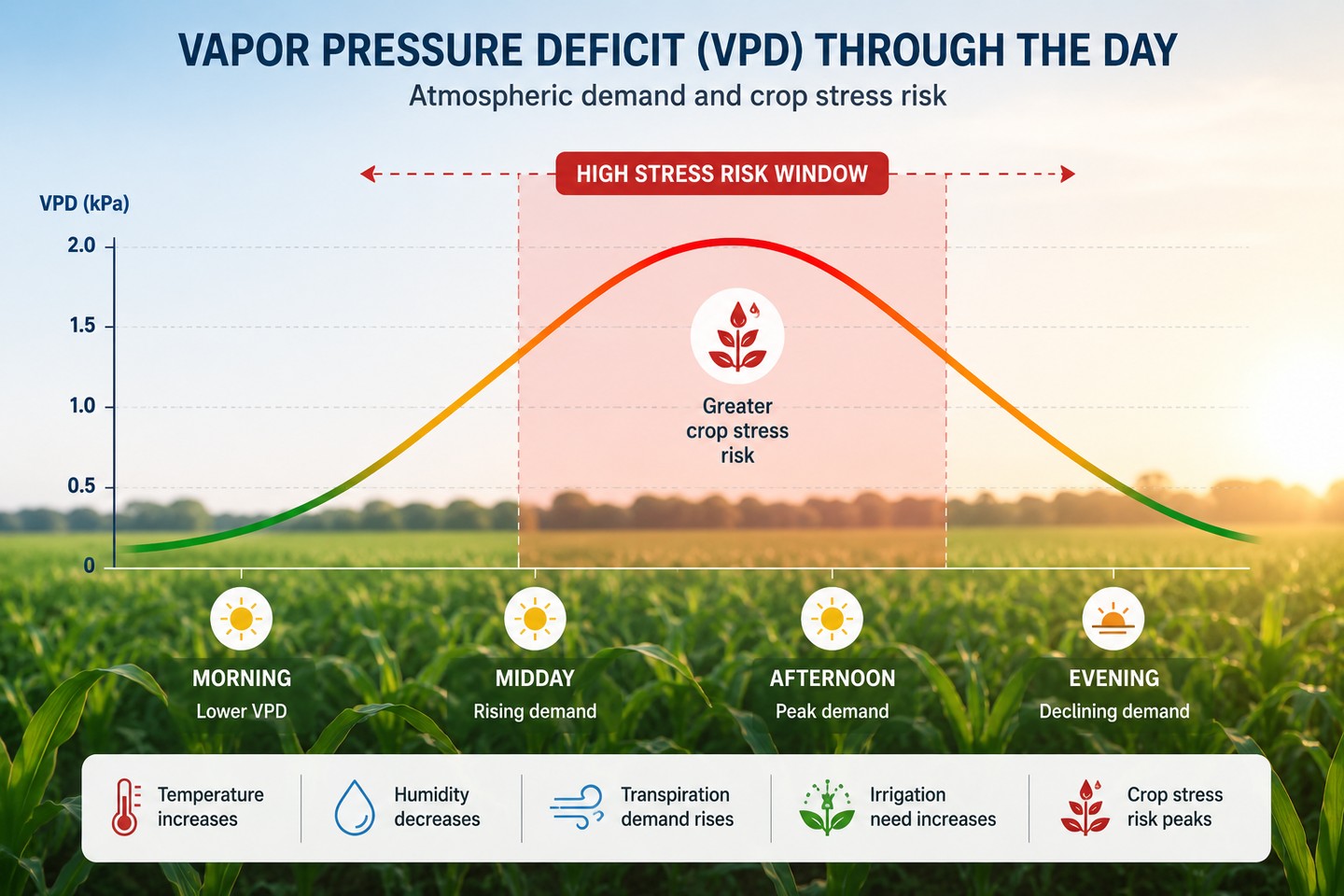
VPD and Crop Stress
VPD is one of the missing links between weather and crop stress.
A hot day is not always equally stressful. A hot and humid day may create different crop behavior than a hot and dry day. A moderately warm day with very low humidity and high wind can create strong atmospheric demand.
This is why VPD is important: it helps explain the plant’s water-loss pressure.
Crop stress develops when atmospheric demand exceeds the crop’s ability to supply water through the soil-root-plant system.
That ability depends on:
- Soil moisture
- Root depth
- Root health
- Soil texture
- Soil compaction
- Salinity
- Crop stage
- Plant hydraulic capacity
- Irrigation history
- Nutrient status
- Field variability
VPD identifies the demand side. Soil water balance and soil intelligence help explain the supply side.
VPD and Irrigation Decisions
VPD can improve irrigation decisions because it helps estimate how aggressively the atmosphere is pulling water from the crop.
A field with moderate soil moisture may still require attention if the forecast shows several days of high VPD. In contrast, irrigation may be safely delayed if VPD is low, evapotranspiration is moderate, and rainfall is expected.
VPD helps answer:
- Is atmospheric demand increasing today?
- Is the crop likely to lose water faster than usual?
- Is a sensitive crop stage exposed to high stress conditions?
- Should irrigation be advanced before a high-VPD period?
- Should irrigation be prioritized for shallow soils, sandy zones, or weaker crop areas?
- Is a visible NDVI decline potentially linked to atmospheric demand and water stress?
- Are crop protection or fertilizer operations risky because the crop is under stress?
VPD should not replace soil moisture or water balance. It should strengthen them.
The most useful irrigation interpretation combines:
- VPD
- Evapotranspiration
- Soil water balance
- Forecast rainfall
- Crop stage
- Root-zone capacity
- Soil variability
- Irrigation system capacity
- Field observations
VPD and Evapotranspiration
VPD is closely related to evapotranspiration because it represents atmospheric demand.
When VPD is high, the atmosphere has a greater capacity to remove water. This can increase transpiration and evaporation, especially when water is available. But the response is not always linear. Under very high VPD, plants may close stomata, reducing transpiration and photosynthesis.
This means a high VPD day can be stressful in two ways:
- The crop may lose water faster if stomata remain open.
- The crop may reduce photosynthesis if stomata close to conserve water.
Both outcomes matter for agronomic decisions.
VPD and Crop Stage
VPD stress is not equally damaging at every crop stage.
A high-VPD event during a less sensitive vegetative stage may have limited impact if soil water is sufficient. The same event during flowering, pollination, fruit set, or grain fill may be much more important.
This is why VPD should be interpreted with crop-stage information.
Examples:
- During establishment, high VPD can increase seedling stress and water demand.
- During vegetative growth, high VPD can reduce leaf expansion if water supply is limited.
- During flowering, high VPD and heat can increase reproductive stress risk.
- During grain fill or fruit development, high VPD can affect water demand, quality, and yield formation.
- Near maturity, high VPD may accelerate drying, which may help or harm depending on crop and management goal.
A VPD alert is more useful when the platform knows what stage the crop is likely to be in.
VPD and Sprayability
VPD can also inform crop protection decisions.
High VPD often occurs with dry air and strong evaporative demand. This can affect spray droplets, crop stress status, and application timing. If the crop is already under stress, some applications may require extra caution, depending on product label, crop stage, weather conditions, and local regulations.
VPD should be considered together with:
- Wind speed
- Temperature
- Rain forecast
- Relative humidity
- Droplet size
- Product label
- Crop stage
- Crop stress status
- Operator safety
- Local regulations
A sprayability decision should never be based on VPD alone, but VPD can help explain why a window is favorable or risky.
VPD and Satellite Monitoring
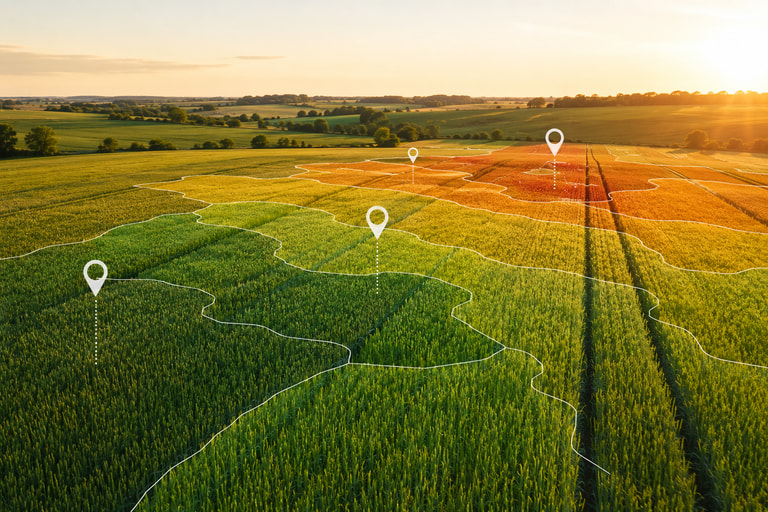
Satellite imagery can show crop variability, but it cannot always explain the cause.
A weak NDVI area may be related to:
- Water stress
- Soil variability
- Nutrient limitation
- Disease
- Pest damage
- Poor emergence
- Compaction
- Salinity
- Drainage problems
- Previous management differences
VPD adds atmospheric context.
If NDVI declines after a period of high VPD and low soil water balance, water stress becomes a stronger hypothesis. If VPD was low and soil water balance was adequate, other explanations may be more likely.
This is the value of combining VPD with satellite data: it helps move from “where is the problem?” to “what may be causing the problem?”
VPD and Soil Variability
Two fields with the same VPD may respond differently.
Even two zones inside the same field may respond differently.
Why? Because atmospheric demand is only one side of the equation. The crop response depends on the soil’s ability to supply water.
A sandy zone may dry quickly under high VPD. A compacted area may restrict root access to water. A low organic matter zone may have less available water. A saline zone may make water harder for the crop to use, even when moisture is present.
This is why field-level VPD interpretation should include soil intelligence.
VPD tells us the atmospheric demand. Soil data tells us how much resilience the field has against that demand.
How Terra Oracle AI Uses VPD
Terra Oracle AI uses VPD as part of its agronomic-indices layer.
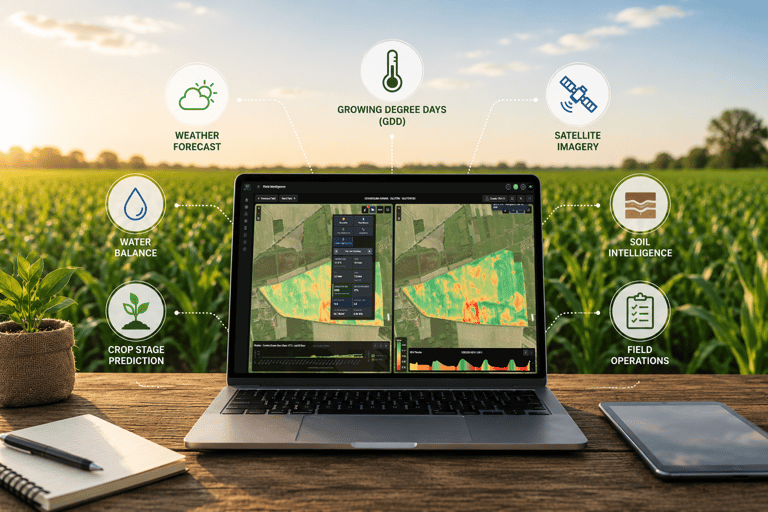
The platform can connect VPD with:
- Weather history
- Weather forecast
- Temperature dynamics
- Relative humidity
- Evapotranspiration
- Soil water balance
- Growing degree days
- Crop stage
- Satellite imagery and NDVI trends
- Soil intelligence
- Field operations
- Sprayability
- AI agronomic reasoning
This turns VPD from a technical weather metric into a practical decision-support signal.
The Terra Oracle AI Advisor can help answer:
- Is the crop under atmospheric stress risk today?
- Is the stress risk likely to increase in the next few days?
- Is the field’s water balance strong enough to tolerate high VPD?
- Is a weak NDVI zone potentially linked to water stress?
- Should irrigation, scouting, or operation timing be adjusted?
- Is a crop protection window risky because of high atmospheric demand?
- Which fields should be prioritized first?
Learn more: Terra Oracle AI Advisor
Example: From VPD to Field Decision
A maize field is approaching flowering. The forecast shows high temperature, low humidity, and elevated VPD for the next three days. Soil water balance shows that the root zone is moving toward depletion. NDVI shows that one section of the field has weaker canopy development.
A basic weather tool may show only a hot and dry forecast.
A VPD-aware agronomic system can provide more useful interpretation:
- Atmospheric water demand is increasing.
- The crop is approaching a sensitive growth stage.
- Soil water balance suggests declining water availability.
- The weaker NDVI zone may be more vulnerable.
- Irrigation should be reviewed before the high-VPD period.
- Scouting should prioritize the weaker zone.
- Crop protection decisions should consider crop stress and sprayability.
This is the difference between seeing weather data and using weather intelligence.
Decisions VPD Can Inform
VPD can support many field decisions, including:
Irrigation Timing
High VPD increases atmospheric demand and can accelerate root-zone depletion. It can help determine whether irrigation should be advanced or prioritized.
Irrigation Prioritization
When irrigation capacity is limited, fields with high VPD exposure, sensitive crop stages, and weaker soil water balance may need priority.
Crop Scouting
High VPD periods can reveal stress-prone zones. Scouting after or during these windows may help identify water, root, soil, or nutrient limitations.
Crop Protection Timing
VPD can help assess whether crop stress or spray conditions may affect application timing.
Fertilizer and Fertigation Decisions
Crop water status affects nutrient uptake. High VPD and water stress may reduce uptake efficiency or increase the need to adjust timing.
Harvest and Quality Management
In some crops, high VPD can influence drying, fruit water status, quality, and stress-related timing decisions.
Risk Alerts
VPD can be used as part of alerts for crop stress, irrigation urgency, heat stress, and sensitive crop-stage windows.
Common Mistakes When Using VPD
Mistake 1: Treating VPD as the Same as Temperature
Temperature is only part of the story. VPD combines temperature and humidity to estimate atmospheric demand.
Mistake 2: Treating VPD as the Same as Relative Humidity
Relative humidity alone can be misleading because warm air and cool air have different water-holding capacities. VPD is more directly connected to plant water loss.
Mistake 3: Using One Universal VPD Threshold for Every Crop
VPD interpretation depends on crop, stage, rooting depth, irrigation status, and local climate. A threshold that matters in one crop or system may not apply directly to another.
Mistake 4: Ignoring Soil Water Supply
High VPD is more dangerous when soil water is limited or roots cannot access water. VPD must be interpreted with soil water balance.
Mistake 5: Ignoring Crop Stage
A high-VPD day during flowering may be more important than the same VPD during a less sensitive stage.
Mistake 6: Using VPD Without Explanation
A VPD value alone is not enough. The grower needs to know what it means, why it matters, and which action is recommended.
What Makes a Good VPD Tool?
A good VPD tool should be:
Field-Specific
It should use weather data relevant to the actual field.
Forecast-Aware
It should show upcoming high-risk windows, not only current conditions.
Crop-Aware
It should interpret VPD according to crop type and growth stage.
Connected to Soil Water Balance
It should combine atmospheric demand with root-zone water supply.
Connected to Satellite Imagery
It should help explain spatial crop-stress patterns.
Explainable
It should show why the platform identifies stress risk and which factor is driving the recommendation.
Actionable
It should help decide whether to irrigate, scout, delay, spray, inspect, or prioritize.
The Future of VPD in AI Agronomy
VPD is becoming more important because weather volatility is increasing and crop stress is often driven by combinations of heat, dry air, soil water deficit, and sensitive crop stages.
The future of VPD in agriculture is not simply displaying kPa values. It is using VPD as part of a decision-intelligence system.
That means connecting VPD with:
- Soil water balance
- Crop stage
- Growing degree days
- NDVI and satellite trends
- Weather forecast
- Irrigation history
- Soil variability
- Crop protection windows
- Field operations
- Economic risk
- Explainable AI recommendations
This is how VPD becomes useful in the field: not as a number, but as a reasoned agronomic signal.
FAQ
What is vapor pressure deficit?
Vapor pressure deficit is the difference between how much water vapor the air could hold when saturated and how much water vapor it currently holds. It indicates how strongly the air is pulling water from the crop.
What does VPD mean in agriculture?
In agriculture, VPD is a measure of atmospheric water demand. It helps explain crop transpiration, water stress risk, irrigation urgency, and crop response to hot or dry weather.
How is VPD related to crop stress?
High VPD increases the drying force on leaves. If the crop cannot supply enough water from the roots, it may close stomata to conserve water, reducing photosynthesis and increasing stress risk.
Is high VPD always bad?
Not always. Moderate VPD can support transpiration and nutrient movement when water supply is adequate. Very high VPD becomes risky when atmospheric demand exceeds the plant’s ability to supply water.
Is low VPD always good?
No. Low VPD means atmospheric demand is low, but it may also be associated with humid canopy conditions, slower drying, and disease-favorable environments in some crops.
How is VPD different from relative humidity?
Relative humidity describes how full the air is with moisture relative to its capacity. VPD describes the actual drying force on the plant by combining temperature and humidity.
Can VPD help irrigation scheduling?
Yes. VPD helps estimate atmospheric demand and can improve irrigation timing when combined with soil water balance, evapotranspiration, crop stage, and forecast data.
How does Terra Oracle AI use VPD?
Terra Oracle AI uses VPD as part of its agronomic-indices layer. The platform connects VPD with weather, soil water balance, NDVI, crop stage, soil intelligence, field operations, and AI Advisor recommendations.
Conclusion
VPD helps farmers read atmospheric demand, not just temperature or humidity. Combined with soil water balance, crop stage, and NDVI, it supports clearer irrigation, scouting, and stress decisions.
Learn more:
- AI Advisor
- Soil Water Balance for Irrigation Decisions
- Growing Degree Days (GDD), Explained
- The Sprayability Index, Explained
References
- Grossiord, C., et al. (2020). Plant responses to rising vapor pressure deficit . New Phytologist, 226(6), 1550–1566.
- Medina, S., et al. (2019). The plant-transpiration response to vapor pressure deficit (VPD) in durum wheat is associated with differential yield performance and specific expression of genes involved in primary metabolism and water transport . Frontiers in Plant Science, 9, 1994.
- Devi, M.J., Reddy, V.R., & Timlin, D. (2022). Drought-induced responses in maize under different vapor pressure deficit conditions . Plants, 11(20), 2771.
- Song, X., Miao, L., Jiao, X., Ibrahim, M., & Li, J. (2022). Regulating vapor pressure deficit and soil moisture improves tomato and cucumber plant growth and water productivity in the greenhouse . Horticulturae, 8(2), 147.
- Zhang, D., et al. (2017). Vapour pressure deficit control in relation to water transport and water productivity in greenhouse tomato production during summer . Scientific Reports, 7, 43461.
- López, J., Way, D.A., & Sadok, W. (2021). Systemic effects of rising atmospheric vapor pressure deficit on plant physiology and productivity . Global Change Biology, 27(9), 1704–1720.
- Köhler, T., Wankmüller, F.J.P., Sadok, W., & Carminati, A. (2023). Transpiration response to soil drying versus increasing vapor pressure deficit in crops: physical and physiological mechanisms and key plant traits . Journal of Experimental Botany, 74(16), 4789–4807.